Resurface. Even out. Start fresh.
Medical-grade chemical peels — VI Peel and Perfect Derma Peel — physician-supervised resurfacing that addresses hyperpigmentation, acne scars, sun damage, and texture at a depth topical treatments can't reach Applied to the face, hands, and neck — wherever sun damage, pigmentation, and aging make their mark.
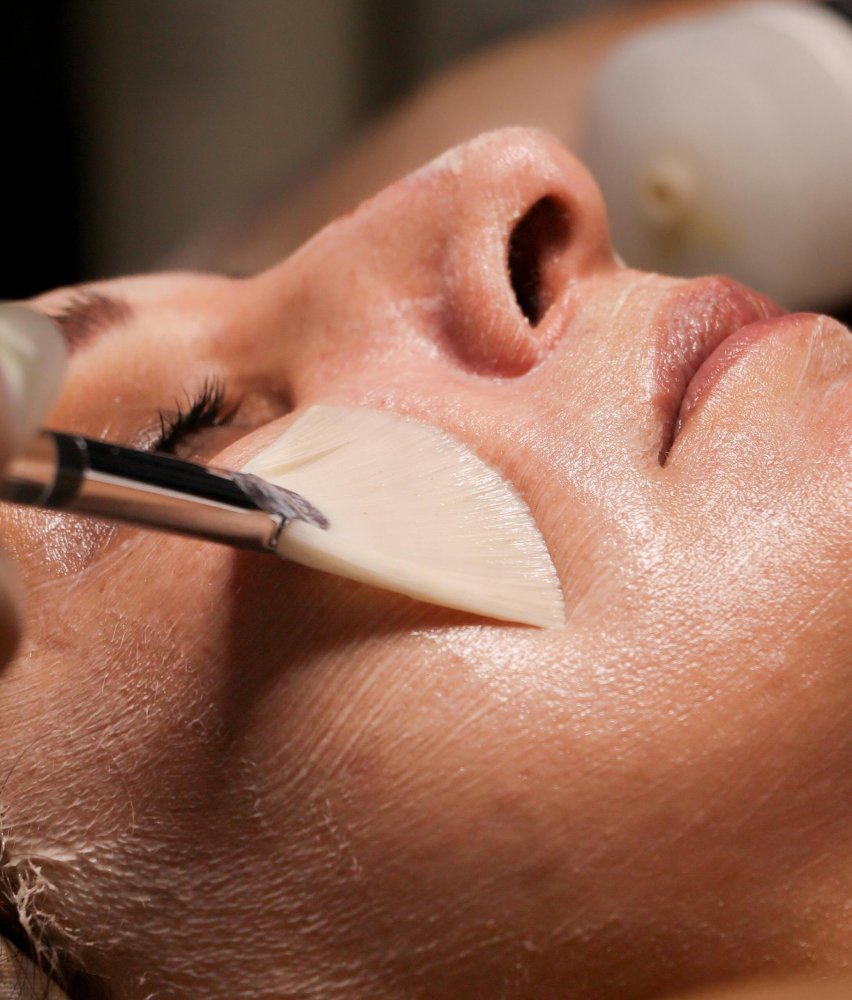
Chemical peels work at a depth that skincare cannot. These are the conditions they address best.
Medical-grade resurfacing removes damaged skin layers systematically, stimulates collagen production, and reveals newer, clearer skin. The right peel formulation is matched to your skin type and primary concern.
Accumulated UV damage that produces flat brown spots, uneven patches, and general tonal unevenness. Chemical peels dissolve the melanin-rich surface cells and inhibit melanocyte activity — progressively lightening existing pigmentation and preventing new formation. Requires a peel formulation matched to your Fitzpatrick skin type.
Hormonally driven pigmentation that creates symmetrical patches on the upper face, forehead, and upper lip. Notoriously difficult to treat — but the VI Peel and Perfect Derma Peel are among the most effective non-laser options available, particularly when combined with a physician-guided topical maintenance protocol.
Flat brown or red post-inflammatory marks (PIH) and shallow textural scarring from past acne respond well to chemical resurfacing. A series of 2–4 peels produces progressive improvement. Deep, pitted scarring requires additional treatments beyond peels alone — your physician will be honest about what's achievable.
Surface irregularity, enlarged pores, and rough texture caused by accumulated dead cells and impaired cellular turnover. Chemical exfoliation removes these layers systematically and stimulates faster cell renewal — resulting in smoother, more refined skin texture over a course of treatments.
Fine surface lines and the general dullness that characterizes early photoaging respond to the collagen-stimulating effect of medium-depth peels. The trichloroacetic acid component of both VI Peel and Perfect Derma Peel directly stimulates fibroblast activity in the dermis beneath the treated surface.
Salicylic acid — present in both peel formulations — is a beta-hydroxy acid that dissolves within follicles to clear blockages and reduce sebum production. Chemical peels can be an effective component of an acne management protocol, particularly for comedonal and papular acne that has not responded fully to topical treatments.
If topical skincare hasn't moved the needle, a physician-supervised peel is a fundamentally different intervention.
The difference isn't the acid — it's the formulation, the concentration, the depth of penetration, and the monitoring throughout the process. Medical-grade peels are a clinical treatment, not an enhanced spa service.
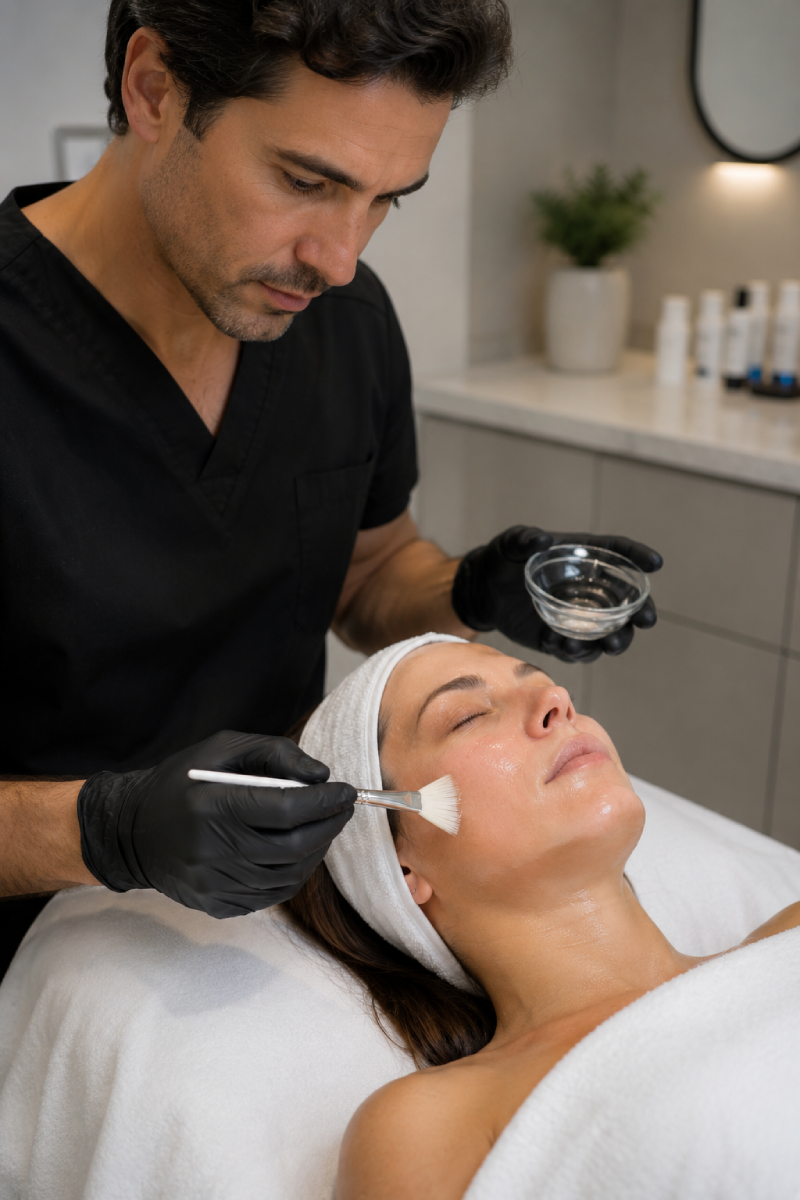
Controlled exfoliation that triggers real renewal.
Chemical peels work by applying an acidic solution that penetrates and dissolves a defined layer of skin cells. The depth of penetration — determined by the acid type, concentration, and application time — dictates the degree of resurfacing and the intensity of the collagen-stimulating response. Superficial peels affect only the epidermis. Medium-depth peels reach the papillary dermis, producing more significant and longer-lasting changes.
At Iuventus we use two medical-grade peel systems: VI Peel and Perfect Derma Peel. Both are medium-depth peels that combine TCA (trichloroacetic acid) with other active acids — salicylic, retinoic, kojic, and vitamin C — in formulations clinically validated across all Fitzpatrick skin types. This is clinically significant: many medium-depth peels cannot be safely used on darker skin tones, but both of these systems are specifically formulated to minimize post-inflammatory hyperpigmentation risk.
After application, the treated skin begins to peel 2–3 days later and completes over 5–7 days. During this period skin looks noticeably flaky and tight — the visible shedding of the damaged layers. The new skin revealed beneath is smoother, clearer, and has a higher density of collagen and elastin than what was removed. Full results are visible at 7–10 days and continue to improve for 4–6 weeks as the deeper collagen response develops.
VI Peel: combines TCA, retinoic acid, salicylic acid, phenol, and vitamin C. Excellent all-round peel for texture, pigmentation, and lines. Validated for Fitzpatrick I–VI. Perfect Derma Peel: TCA + kojic acid + retinol + glutathione complex. Particularly effective for melasma and darker skin tone hyperpigmentation. Your physician selects based on your primary concern and skin type — or recommends alternating both across a series.
VI Peel vs. Perfect Derma — which is right for you?
Both are medium-depth medical-grade peels safe for all skin types. The difference is in their active ingredient profile and primary indication strengths.
| Feature | VI Peel ★ | Perfect Derma Peel |
|---|---|---|
| Primary acids | TCA + Retinoic + Salicylic + Phenol + Vit C | TCA + Kojic + Retinol + Glutathione |
| Best for | All-round texture, lines, mild pigmentation | Melasma, deeper hyperpigmentation, darker skin |
| Fitzpatrick range | I–VI | I–VI |
| Peeling duration | 5–7 days | 5–7 days |
| Pain during application | Mild warmth/tingling | Mild warmth/tingling |
| Collagen stimulation | ✓ Yes | ✓ Yes |
| Can be combined | ✓ Alternated in a series | ✓ Alternated in a series |
Medical peels produce changes skincare cannot replicate.
The fundamental limitation of topical treatments is penetration — the skin barrier keeps actives out. Physician-applied chemical peels bypass this barrier entirely, delivering therapeutic concentrations of acids directly to the layers where pigmentation, scarring, and collagen loss occur.
From your first peel to noticeably different skin.
We assess your Fitzpatrick skin type, photodamage pattern, primary concerns, and any contraindications (active acne, recent retinoids, prior isotretinoin, pregnancy). We select the right peel and discuss realistic expectations.
Patients with Fitzpatrick IV–VI skin may benefit from 2–4 weeks of pre-conditioning with retinoids or hydroquinone to reduce PIH risk. Your physician will advise. Most patients require no preparation.
30–45 minutes in our clinical setting. The peel solution is applied evenly across the treatment area. You'll feel mild warmth and tingling. A take-home kit is provided for post-peel care. Peeling begins 2–3 days later The solution remains for several minutes, then a neutralizing agent is applied to stop the acid action before the remaining peel is washed off.
We assess your result at 10–14 days. For a peel series, we space treatments 4–6 weeks apart, allowing full healing and collagen development between sessions. Most patients complete 2–4 treatments for their primary concern.
Medicine that
gets you.
Peel outcomes depend entirely on the physician's assessment of your skin type, the right formulation selection, and the monitoring throughout the series. Getting this wrong doesn't just underperform — it can cause PIH.
Fitzpatrick-Safe Formulations
Both VI Peel and Perfect Derma Peel are clinically validated for darker skin tones — a critical distinction. We assess phototype before every peel and never apply formulations inappropriate for your skin.
Physician Assessment, Not Aesthetician Protocols
Chemical peels at Iuventus are supervised by board-certified physicians who assess your skin clinically — not following a standard aesthetic menu. The formulation and depth is selected for your specific condition.
Post-Peel Care Included
Every treatment includes a complete post-peel care kit with instructions. Proper post-peel care significantly affects both the comfort of the peeling process and the quality of the final result.
Honest Expectations
We'll tell you what a peel can realistically achieve for your specific concern and skin type — including when a different treatment (laser, PRF, subcision) would produce better outcomes for deeper scarring.
Real patients.
Real results.
Everything you
want to know.
Your skin can look
genuinely different.
A free consultation, a skin type assessment, and a peel series plan with honest expectations about what your skin can achieve in 3 months.