The body's repair cells. Directed where you need them.
Stem cell therapy extracts your own bone marrow stem cells, modifies them in a lab environment to form specialized cells, and injects them into damaged areas to repair tissue, reduce chronic pain, and halt the progression of degenerative conditions. No surgery. No rejection risk.
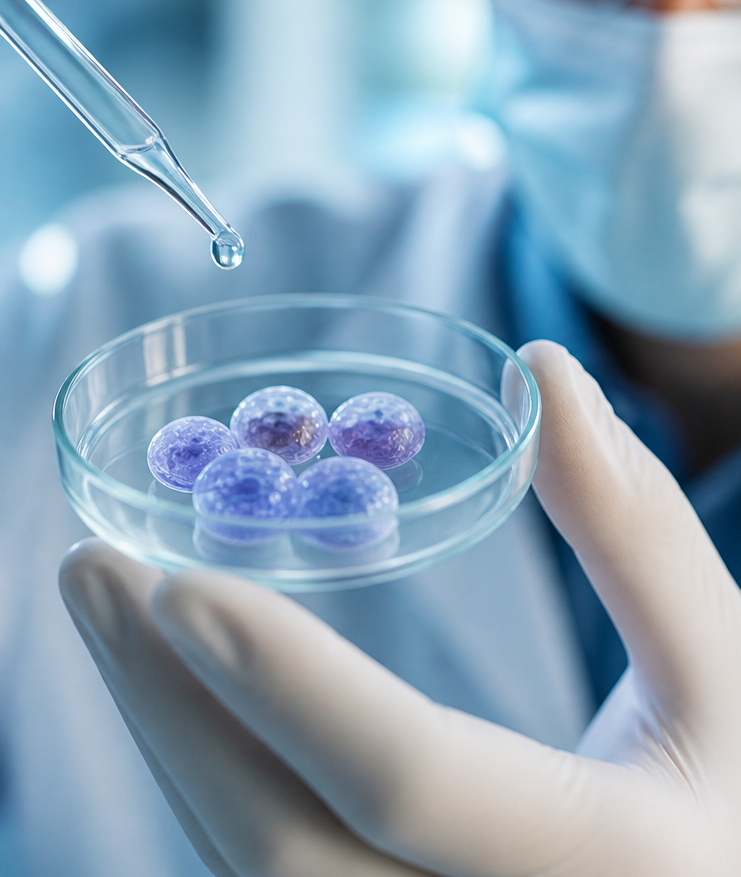
Stem cells control all other cells. Directed to the right place, they repair what's broken.
Like a parent company controlling subsidiaries, stem cells can divide into any specialized cell type to promote healing, repair damage, and regenerate tissue. Stem cell therapy directs this capacity to the specific areas where conventional medicine has reached its limits.
Stem cell therapy is one of the most promising treatments for arthritis and osteoarthritis — conditions where cartilage has degraded and conventional treatment can only manage symptoms. Stem cells injected into affected joints differentiate into cartilage and synovial cells, halting further degeneration and producing genuine tissue repair. Doctors now strongly recommend stem cell therapy specifically for arthritis pain.
Sciatica — nerve pain caused by compression of the sciatic nerve — and broader spinal cord injuries represent some of the most debilitating pain conditions. Stem cell therapy addresses the structural and inflammatory components of spinal conditions, with cells differentiating to support nerve regeneration and reduce the compressive inflammation driving the pain.
For tendonitis and sports injuries where PRP and shockwave therapy have not produced sufficient repair, stem cell therapy provides a deeper regenerative intervention. Stem cells differentiate into tendon and connective tissue cells — producing structural repair that growth factor therapy alone cannot achieve for severe or long-standing damage.
Stem cell therapy for diabetes focuses on regenerating pancreatic beta cells and improving insulin regulation — addressing the cellular dysfunction at the root of the condition rather than managing its downstream effects. Doctors now specifically recommend stem cell therapy for diabetes as part of a regenerative approach to metabolic disease.
Cardiac stem cell therapy directs regenerative cells toward damaged heart muscle and vascular tissue — supporting the repair of myocardial damage and improving cardiac function in patients with chronic heart conditions. An emerging but increasingly supported application of stem cell medicine.
Stem cell therapy for Alzheimer's and other neurodegenerative conditions represents one of the most active areas of regenerative medicine research. Stem cells introduced to the central nervous system can potentially differentiate into neuronal support cells — reducing neuroinflammation and supporting the neural environment that degenerative diseases damage.
Conventional treatments can't compare with the regenerative capacity of stem cell therapy. Schedule a consultation to find out if it's right for your condition.
Stem cell therapy can be used not only to replace other treatments but to speed up tissue regeneration alongside them. It maximizes the effectiveness of other solutions — working synergistically with PRP, shockwave, and conventional medical treatment.
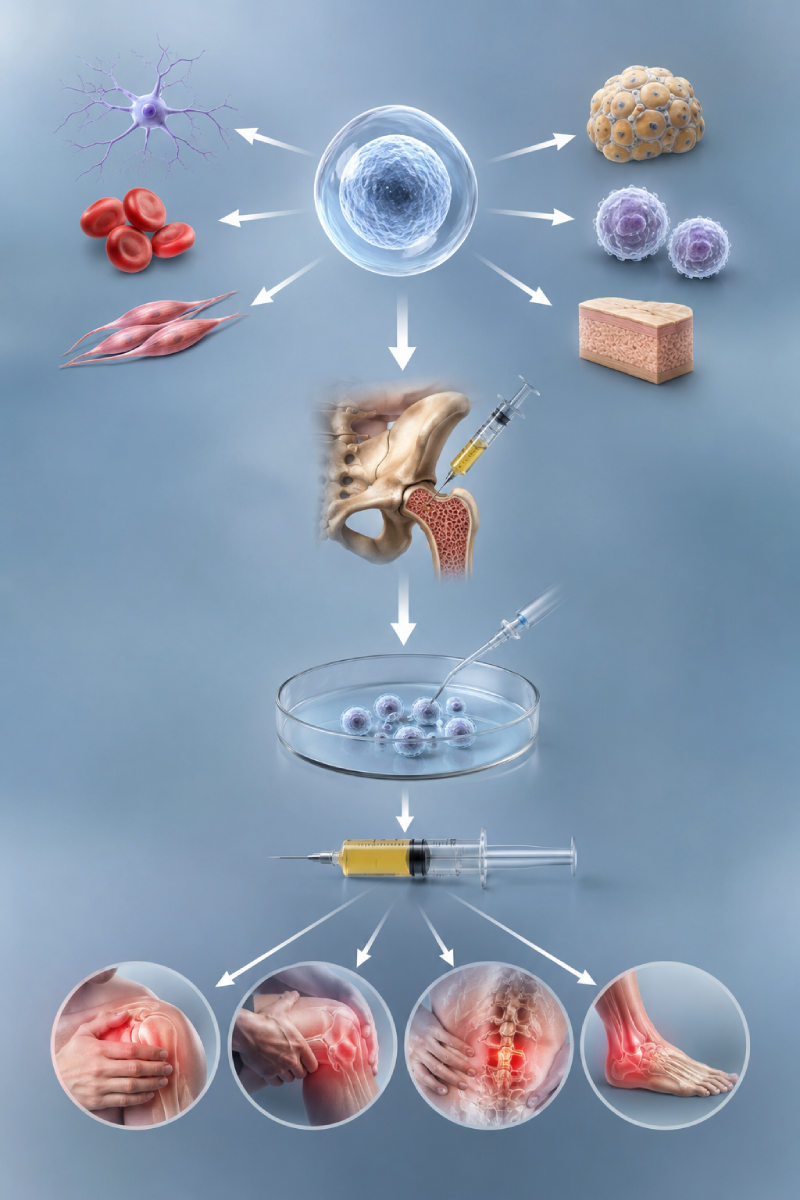
Basic cells that can become any cell your body needs.
Stem cells are the body's basic building blocks — they can naturally divide into any specialized cell type to perform vital functions including promoting healing, repairing damage, and regenerating tissue. Bone marrow is the primary source of stem cells in the human body. In stem cell therapy, they are extracted from the patient's bone marrow and then modified in a lab environment to form the specialized cell types needed for the target condition. Once prepared, they are injected into the damaged areas where their regenerative capacity is directed.
The therapy prevents the progression of degenerative conditions and debilitating ailments by introducing cells that differentiate into the specific tissue types that have been damaged or destroyed. Unlike medications, which manage symptoms, and surgery, which physically intervenes but doesn't regenerate, stem cell therapy adds new biological capacity to the treated area — producing repair from the cellular level upward.
Because stem cell therapy uses the patient's own cells, there is zero risk of immune rejection. The immune system recognizes the modified cells as self and does not mount a rejection response. This eliminates one of the primary risks associated with transplant and biological therapies. No surgeries are required — the procedure does not involve major invasive techniques or general anesthesia.
Arthritis pain · Sciatica · Diabetes · Spinal cord injuries · Heart problems · Tendonitis · Alzheimer's disease · Chronic pain conditions unresponsive to conventional treatment. Stem cell therapy can also be used alongside other treatments — maximizing their effectiveness by accelerating tissue regeneration simultaneously.
The most revolutionary treatment in modern pain medicine.
Stem cell therapy is one of the most significant advances in regenerative medicine. Its efficacy for alleviating chronic pain and degenerative conditions is well above that of regular medications — without the side effects of prescription analgesics or the risks of surgery.
From chronic pain to cellular repair.
Your physician reviews your condition, prior treatments, and medical history. We assess whether stem cell therapy is appropriate for your specific case and what outcomes are realistic. Honest expectations from the first visit.
Stem cells extracted from bone marrow under local anesthetic. The extraction is minimally invasive — no major surgery. Cells are then sent to the lab for modification into the specialized cell types needed for your condition.
Modified stem cells injected directly into the damaged area — joint, spine, tendon, or other target tissue. Precision delivery ensures cells reach the tissue where their regenerative capacity is needed.
Tissue regeneration develops over weeks to months as stem cells differentiate and produce repair. Follow-up assessment at 6–12 weeks. Results can last 1–3 years depending on condition and patient response. Often combined with PRP and shockwave for comprehensive recovery.
Medicine that
gets you.
Stem cell therapy quality depends on extraction method, lab preparation, and injection precision. Iuventus provides affordable care with experienced medical providers who assess your specific condition before recommending treatment.
Your Own Cells — Zero Rejection Risk
Stem cell therapy at Iuventus uses autologous cells from your own bone marrow. Your immune system recognizes them as self — there is no rejection response. This is fundamentally different from treatments using donor cells or external biological material.
No Surgery Required
The procedure does not involve major invasive techniques or general anesthesia. Forget about the risks of going under the knife. Stem cell extraction and injection are minimally invasive procedures performed under local anesthetic.
Amplifies Other Treatments
Stem cell therapy can replace other treatments or work alongside them. It is commonly combined with PRP, shockwave therapy, and conventional rehabilitation — each enhancing the other's effectiveness for complex or long-standing conditions.
Affordable Pricing
Iuventus provides affordable stem cell therapy — reasonably priced for all patients regardless of age or condition. Contact us for specific pricing based on your treatment protocol. Your financial peace of mind is part of our commitment to accessible care.
Patients who chose
cellular repair over surgery.
Everything you
want to know.
Say goodbye to
surgeries and meds.
A free consultation and an assessment of whether stem cell therapy is right for your condition. Affordable pricing — contact us to find out how it may help your specific case.