No medications. No surgery. Acoustic healing.
Shockwave therapy delivers acoustic pulses directly to damaged tissue — breaking up calcium deposits, increasing blood flow, and stimulating collagen production that activates your body's own self-healing mode. Tangible results from the first treatment.
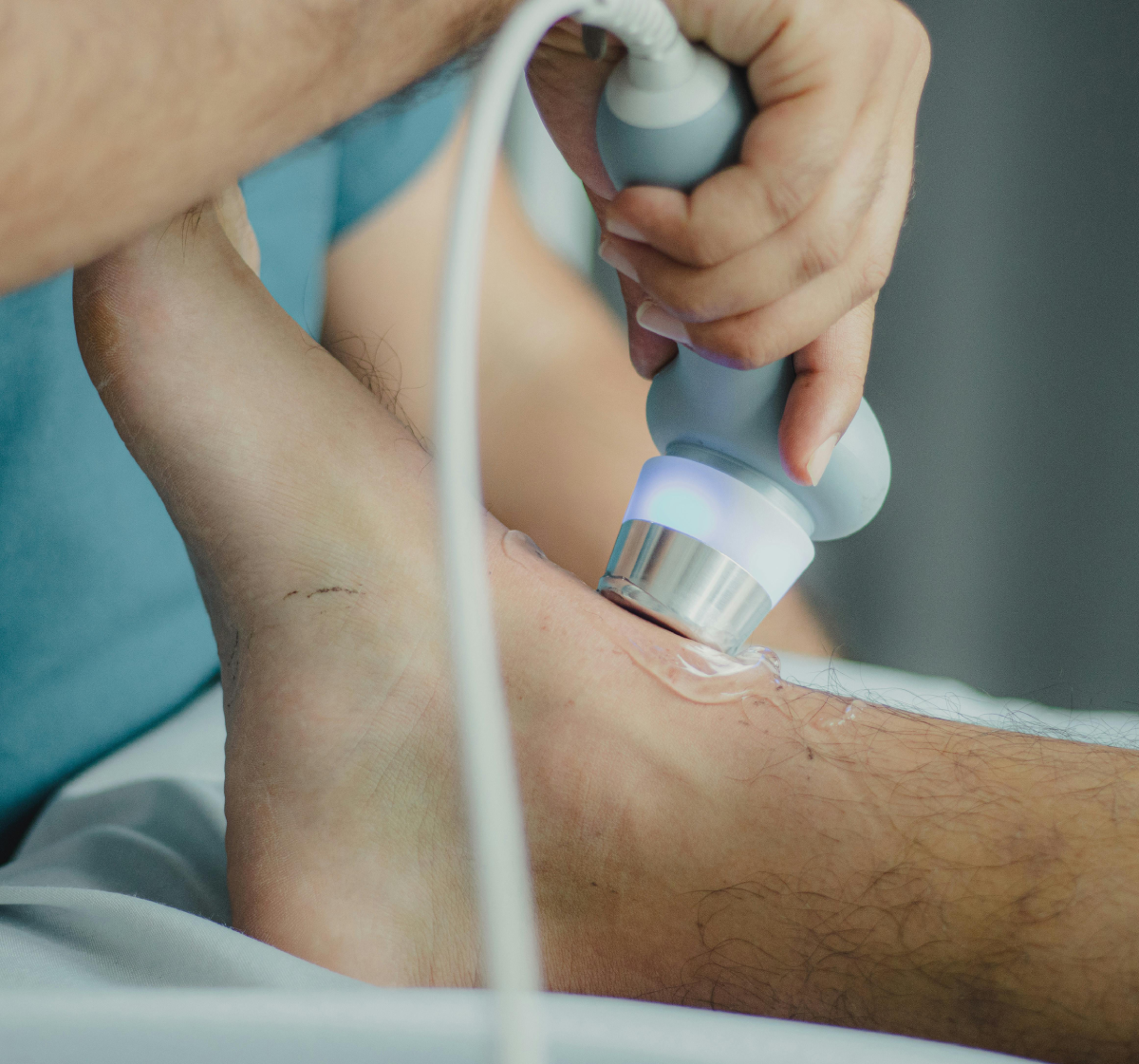
Almost all musculoskeletal impairments respond to acoustic wave treatment.
Shockwave therapy was first used for tennis elbow, sprains, and sports injuries over a decade ago. Its range of therapeutic indications has expanded to cover virtually every musculoskeletal condition — from chronic back pain to Achilles tendinitis to heel discomfort.
Whether caused by falls, twists, sedentary lifestyle, or structural issues, chronic back pain is one of the most common reasons patients seek shockwave therapy. Acoustic waves increase blood flow to sore spots, break up calcium deposits, and stimulate collagen production — activating the body's self-healing mechanisms where painkillers only mask the symptom.
Plantar fasciitis — the most common cause of heel pain — involves chronic inflammation of the tissue connecting the heel bone to the toes. Shockwave therapy delivers acoustic pulses directly to the inflamed fascia, breaking up calcium deposits and stimulating new collagen formation. One of the most consistently effective non-surgical treatments for persistent heel discomfort.
The positive relationship between shockwave therapy and pain relief was established more than a decade ago when it was first used for tennis elbow, sprains, and strains. The acoustic pulses stimulate repair processes in tendons and ligaments that have been unresponsive to rest and conventional treatment. Used by professional athletes to accelerate recovery without surgery.
Patellar tendinopathy (jumper's knee) and hip bursitis are common overuse conditions in active patients. Shockwave therapy addresses the degenerative tendon and bursa changes that cause persistent pain — stimulating the cellular repair processes that are inadequate in chronic tendinopathy where normal healing has stalled.
Rotator cuff conditions and Achilles tendinitis are among the most treatment-resistant musculoskeletal injuries. Shockwave therapy's acoustic pulses penetrate deep into tendon and muscle tissue, breaking up calcification, stimulating vascular growth, and activating the collagen synthesis that produces genuine tissue repair rather than just pain management.
Beyond specific conditions, shockwave therapy is effective for chronic muscle tightness, trigger points, and general musculoskeletal pain that has been resistant to physiotherapy and medication. The acoustic pulses reset chronically contracted muscle fibers and improve circulation in hypoxic tissue — addressing the underlying state, not just the symptom.
If medications and rest haven't worked, shockwave therapy activates what your body hasn't been able to do on its own.
Not everyone is a good candidate for shockwave therapy. Our physicians assess your specific condition, injury history, and the required number of treatments before recommending a protocol. Contact us to find out whether it will be suitable for your case.
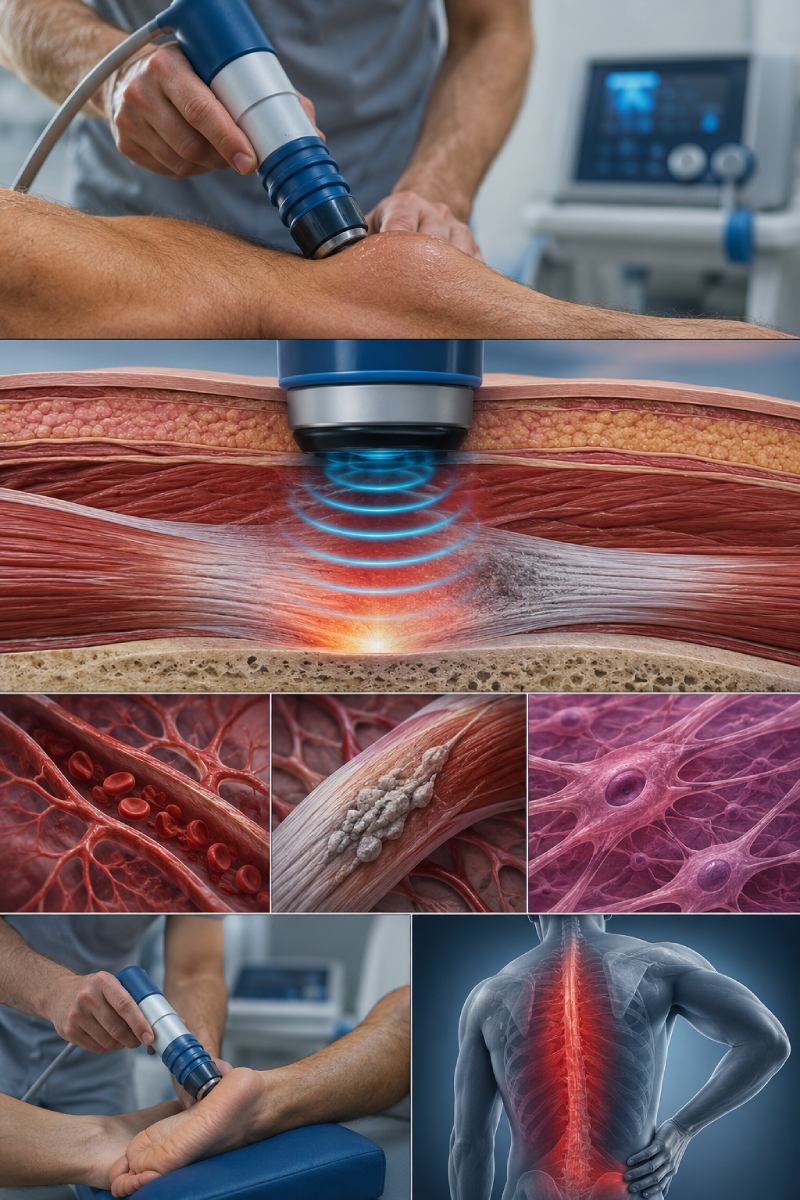
Acoustic pulses that tell tissue to repair itself.
Shockwave therapy delivers a series of acoustic pulses — high-energy sound waves — directly to damaged tissue via a handheld device applied to the skin surface. The pulses penetrate the tissue and produce three simultaneous effects: they increase local blood flow to oxygen-deprived areas, break up calcium deposits that have accumulated in tendons and soft tissue, and stimulate collagen production — the structural protein that gives tendons, ligaments, and connective tissue their strength and elasticity.
The result is that the tissue enters an active repair state — what the site describes as 'self-healing mode.' For chronic conditions where normal tissue repair has stalled — because the injury is too old, too repetitive, or too calcified — shockwave therapy provides the mechanical stimulus that restarts the healing process. This is fundamentally different from painkillers, which mask the symptom, and from surgery, which physically intervenes. Shockwave activates your own biology.
Treatment is given as a series of sessions — typically 3–6 — with tangible results often felt after the first one. The acoustic waves can be targeted precisely to the affected area using the handheld device, making them effective for conditions ranging from deep spinal tissue to superficial heel fascia.
Increased blood flow to sore spots — delivering oxygen and nutrients to hypoxic tissue · Breaking up calcium deposits — removing the calcification that restricts tendon mobility · Collagen production stimulation — rebuilding the structural protein that makes repaired tissue strong. All three happen simultaneously with each acoustic pulse application.
A breakthrough in rehabilitation with over a decade of evidence.
Shockwave therapy has been used in rehabilitation and physical therapy for over 10 years, with a well-established evidence base for musculoskeletal conditions. It has the potential to supersede frequently prescribed medications and surgeries for chronic pain.
From chronic pain to self-healing activated.
Your physician assesses your specific condition, injury history, and duration of symptoms. Not everyone is a good candidate — we confirm shockwave is appropriate for your case and determine the number of sessions required.
The handheld device applies acoustic pulses directly to the affected area — back, heel, elbow, shoulder, knee, or wherever the condition is located. Each session typically 15–30 minutes. Mild discomfort during treatment is common and resolves immediately after.
Typically 3–6 sessions spaced 1 week apart. Tangible results are often felt after the first treatment. Full tissue repair develops over 6–12 weeks as collagen production responds to the acoustic stimulus.
Most patients achieve significant or complete pain relief after a full course. No downtime between sessions — return to normal activity immediately. Follow-up assessment at course completion to confirm outcome and discuss any maintenance needs.
Medicine that
gets you.
Shockwave therapy outcomes depend on accurate diagnosis, appropriate candidacy assessment, and precise application to the affected tissue. We assess before we treat.
Candidacy Assessment First
Not everyone is a good candidate for shockwave therapy. Active cancer, blood clotting disorders, local infection, or bone fractures in the treatment area are contraindications. We assess your specific situation before recommending a protocol.
Sophisticated Equipment
Iuventus uses sophisticated shockwave devices to stimulate repair processes precisely. The quality of the device and the skill of application directly determine outcomes — acoustic energy delivery that is too shallow or misdirected produces inferior results.
Drug-Free by Design
The protocol includes no painkillers and no physical interventions. Patients who come to us specifically to avoid medications or surgery will find that shockwave therapy is genuinely drug-free — not a reduction in medication, but an elimination of it from the treatment plan.
Combined With PRP When Appropriate
For conditions that benefit from both mechanical stimulus (shockwave) and biological growth factor support (PRP), we combine both treatments. The mechanical stimulus of shockwave and the biological regeneration of PRP work synergistically for complex or long-standing injuries.
Patients who chose
healing over painkillers.
Everything you
want to know.
Stop managing the pain.
Start healing it.
A free consultation and an honest assessment of whether shockwave therapy is right for your specific condition. Details on the number of sessions and cost provided at your first visit.