300x more than your normal level. Delivered by IV.
High-dose Vitamin C IV at therapeutic concentrations (350–400 mg/dL) — far beyond anything oral supplementation can achieve. Used for oxidative stress, inflammatory conditions, cancer support, Lyme disease, and immune restoration where oral Vitamin C has no meaningful effect.
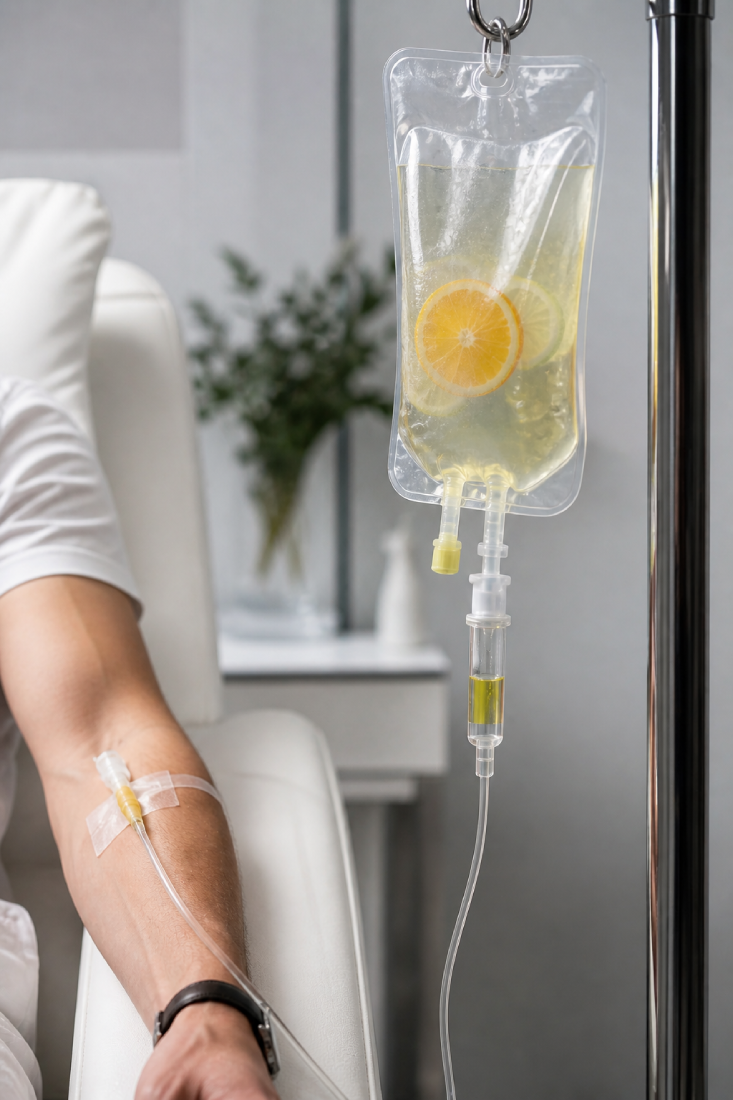
At therapeutic IV doses, Vitamin C does things that are biologically impossible to achieve orally.
The site is explicit: 350–400 mg/dL is the concentration needed for cancer cell disintegration — more than 300x your normal level. Oral delivery cannot produce this. IV delivery can.
At concentrations of 350–400 mg/dL — achievable only by IV — Vitamin C affects cancerous cells while sparing healthy ones. Unlike chemotherapy and radiation, which contribute to oxidative stress and break down Vitamin C in the process, high-dose IV Vitamin C is less toxic to the body and works as a powerful complementary treatment. It is not a guaranteed cure, but it is a meaningful addition to a conventional treatment plan.
Research has shown that high-dose IV Vitamin C can treat inflammatory and oxidative stress-related conditions including Lyme disease. Its antioxidant action neutralizes the excess free radicals that drive the inflammatory cascade in Lyme — supporting the body's natural recovery process alongside antibiotic treatment.
Free radicals damage cells and cause oxidative stress — the underlying mechanism behind aging, heart disease, cancer, autoimmune diseases, and neurodegenerative disorders. Vitamin C at IV doses floods the body with enough antioxidants to neutralize excess free radicals before they cause further damage. The body cannot produce its own Vitamin C — IV therapy provides what injured tissue needs at the concentration it requires.
Traditional cancer treatments like radiation and chemotherapy contribute to oxidative stress and deplete Vitamin C — causing additional cellular damage alongside their therapeutic effect. High-dose IV Vitamin C is a natural complement: it supports the body's antioxidant defenses during treatment, helps healthy cells withstand oxidative damage, and supports recovery between sessions.
At IV doses, Vitamin C directly stimulates white blood cell production, supports interferon production, and activates the cytokine signaling that coordinates immune response. For patients recovering from serious illness, chronic infection, or prolonged immune depletion, IV Vitamin C delivers the immune surge that oral supplementation at any dose cannot produce.
Vitamin C at pharmacological IV concentrations has a direct anti-inflammatory effect — inhibiting NF-κB, a central regulator of inflammatory gene expression. Used as a complementary treatment for a range of inflammatory and autoimmune conditions where oxidative stress is a primary driver of ongoing tissue damage.
There is no oral dose of Vitamin C that produces what IV delivers. The dosage and delivery method are the whole point.
High-dose IV Vitamin C therapy is affordable relative to traditional treatments, less toxic than many conventional approaches, and can be added to any existing treatment plan. A consultation with our physician will determine whether it is appropriate for your specific situation.
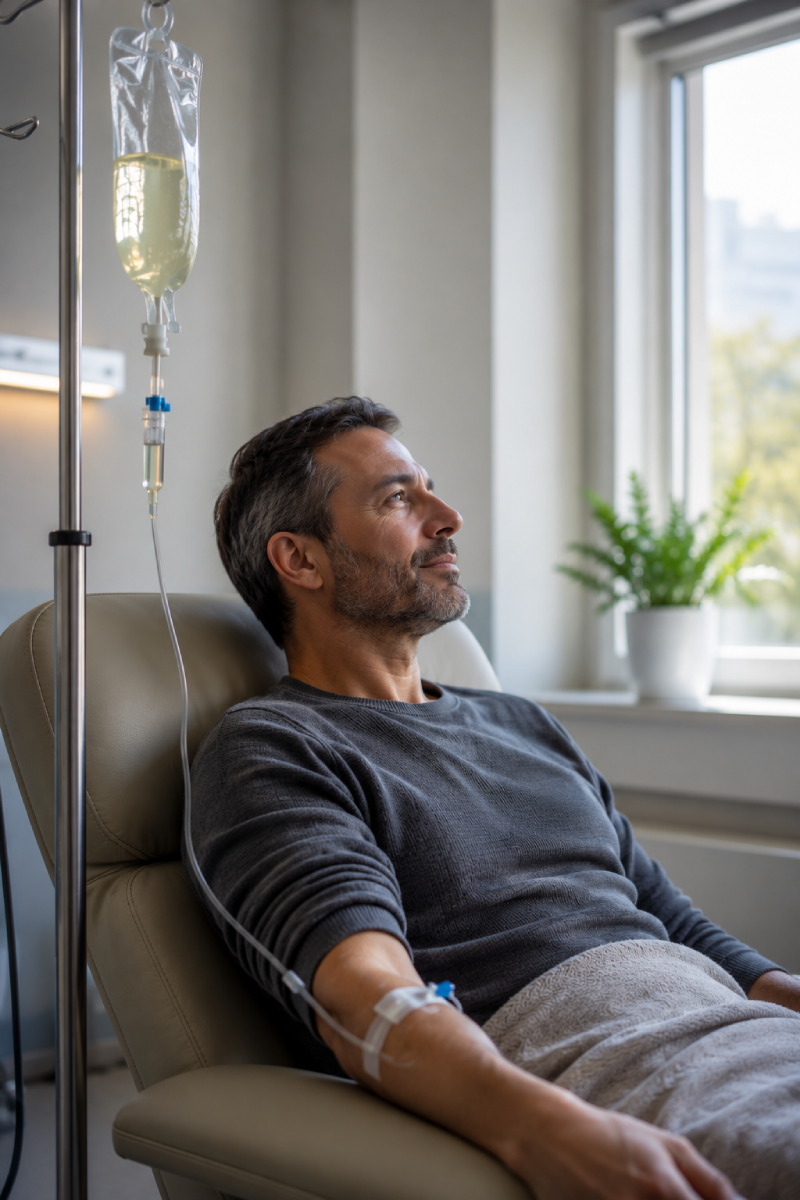
The oral limit is 2g. IV delivers 25g.
The therapeutic mechanism of high-dose IV Vitamin C depends entirely on the concentration achieved. At 350–400 mg/dL — more than 300 times the normal blood level — Vitamin C produces a pro-oxidant effect specifically in cancerous cells and pathogens while antioxidant enzymes (catalase) protect healthy cells. This selective toxicity is the key distinction from chemotherapy, which damages both healthy and cancerous tissue indiscriminately. Studies have confirmed that oral delivery cannot produce high enough concentrations to trigger this effect — IV delivery is the only method that achieves the therapeutic threshold.
An interesting parallel exists in nature: injured animals start producing more Vitamin C to trigger fast regeneration. Human bodies lack this ability — but IV therapy can replicate the effect externally, providing the antioxidant surge that injured or diseased tissue requires. For Lyme disease and cancer specifically, the oxidative stress driving cellular damage can be directly counteracted at these concentrations in ways that feel more like supporting the body's own defenses than imposing a foreign treatment.
Cancer patients seeking complementary support alongside conventional treatment · Lyme disease patients with significant inflammatory component · Patients recovering from chemotherapy or radiation · Chronic oxidative stress or inflammatory conditions · Immune depletion after serious illness. Note: always coordinate with your oncologist or treating physician if you have an active cancer diagnosis.
The dosage is everything. And only IV achieves it.
The difference between oral and IV Vitamin C is not quantitative — it is qualitative. At 350–400 mg/dL, achieved only by IV, mechanisms activate that are biologically impossible at oral concentrations. The research behind high-dose IV Vitamin C has been accumulating since the 1970s.
From immune depletion to immune surge.
We assess your immune history, current illness status, medications, and any contraindications — particularly G6PD deficiency, which is a contraindication for high-dose Vitamin C. We determine the appropriate dose for your situation.
10–25g administered over 45–60 minutes depending on dose and tolerance. A mild cooling sensation and temporary diuretic effect are common. Most patients feel an energy shift during or after the session.
For acute illness or prevention before high-risk exposure: 1–2 sessions clustered. For chronic inflammation or ongoing immune support: monthly. Often combined with glutathione IV in the same session for enhanced antioxidant benefit.
Medicine that
gets you.
G6PD screening before high-dose Vitamin C is a non-negotiable safety step that not all providers perform. We do.
G6PD Screening Before High Doses
G6PD (glucose-6-phosphate dehydrogenase) deficiency is a contraindication for high-dose IV Vitamin C — it causes hemolytic anemia in affected patients. We screen for this before administering doses above 10g. Many providers skip this step. We don't.
Dose Matched to Indication
10g for general immune maintenance. 15–25g for acute illness support, post-viral protocols, or anti-inflammatory goals. We don't use a single dose for all patients.
Combined With Glutathione
High-dose Vitamin C and glutathione work synergistically — Vitamin C regenerates oxidized glutathione, and glutathione protects against the oxidative byproducts of high-dose Vitamin C. We commonly administer both in the same session.
Monitoring Kidney Function
High-dose Vitamin C increases urinary oxalate excretion. For patients with kidney stones or impaired kidney function, we monitor and adjust doses accordingly. Adequate hydration before and after the session is standard protocol.
Real immune support.
Not more supplements.
Everything you
want to know.
Real immune support.
Finally.
A free consultation and assessment of your immune status. G6PD screening included before high-dose protocols. Most patients feel a difference within 48 hours.